
The Summer Event Printing Checklist for Businesses and Organizations
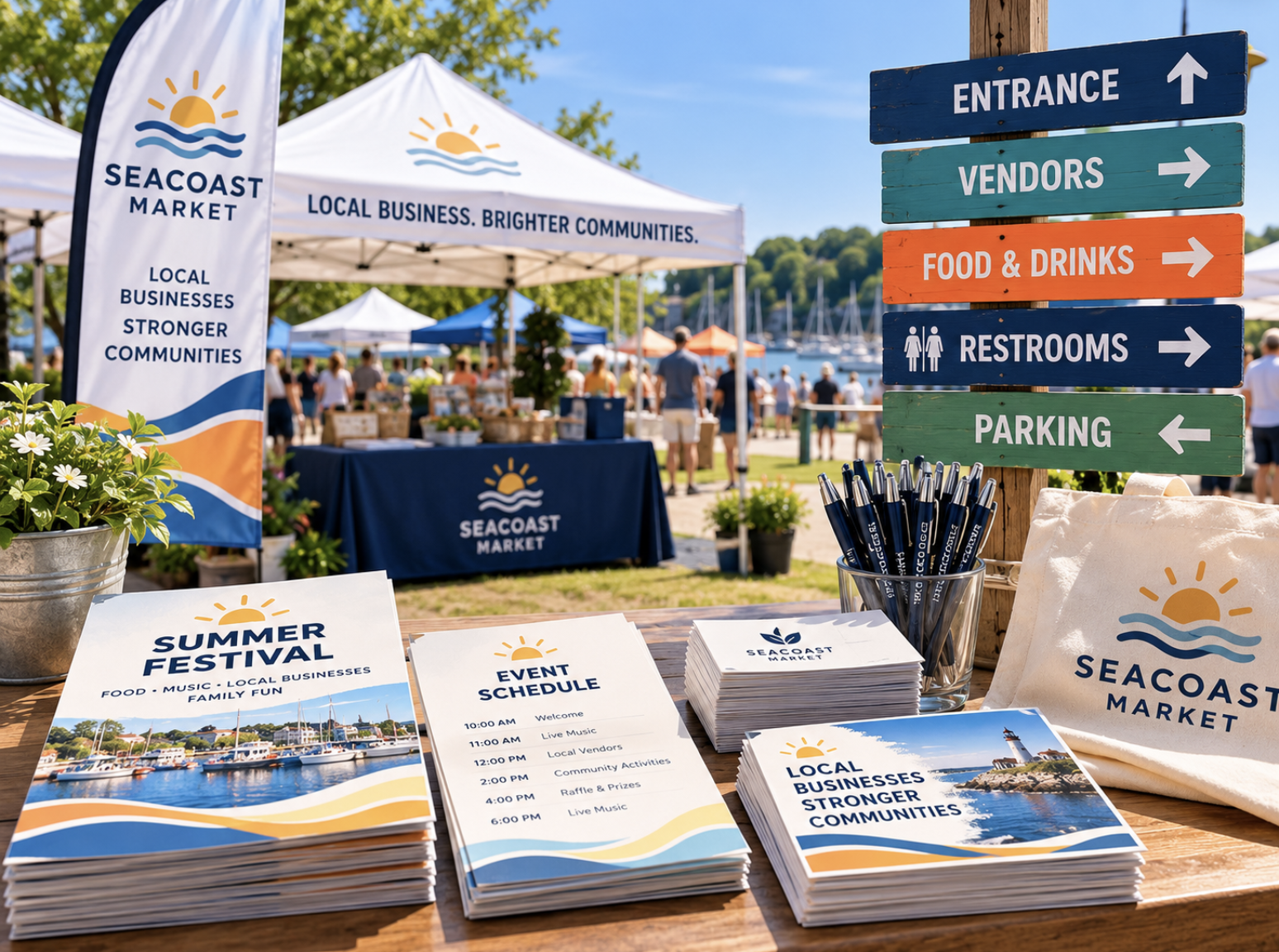
Summer is one of the busiest seasons for community events, outdoor markets, festivals, fundraisers, and business promotions throughout New Hampshire and New England. From local nonprofit gatherings and charity events to trade shows and seasonal retail promotions, these occasions give businesses and organizations valuable opportunities to connect with customers, supporters, and their communities.
While planning an event often involves coordinating vendors, scheduling activities, and organizing logistics, printed materials are another important part of creating a professional and welcoming experience. Well-designed banners, signs, brochures, programs, and promotional handouts can help attendees find their way, understand what's happening, recognize sponsors, and remember your organization after the event ends.
However, event printing requires more preparation than simply ordering a banner a few days beforehand. Outdoor conditions, viewing distances, installation requirements, production timelines, and the overall purpose of the event should all influence which materials you choose.
Whether you're preparing for a summer festival, business expo, outdoor market, fundraising event, or community celebration, this printing checklist will help you plan the materials you need and avoid common last-minute challenges.
1. Start With a Clear Event Printing Plan
Before selecting individual products, take time to understand what your event requires and how printed materials will support the experience.
A small business participating in a local outdoor market may only need a branded banner, business cards, and a few promotional handouts. A larger community fundraiser, on the other hand, might require directional signage, event schedules, sponsor displays, donation information, and printed programs.
Rather than ordering materials individually as needs arise, create a comprehensive list organized by purpose.
Consider dividing your printing needs into four general categories:
- Visibility and branding: Banners, booth signs, branded displays, and promotional graphics that help attendees recognize your organization.
- Directions and information: Entrance signs, schedules, maps, parking information, and other materials that help visitors navigate the event.
- Marketing and engagement: Brochures, postcards, flyers, business cards, and other items attendees can take with them.
- Sponsor and supporter recognition: Printed displays, programs, and signage acknowledging participating businesses or organizations.
Creating this list early makes it easier to identify overlapping needs, coordinate artwork, and prioritize materials with firm deadlines.
It's also helpful to determine who will approve the designs, provide event information, and coordinate the final order. Having a clear point of contact can reduce confusion when multiple departments, sponsors, or volunteers are involved.
2. Make Your Business or Organization Easy to Recognize
At a busy outdoor event, visitors may encounter dozens of booths, displays, and promotional messages. Your printed signage needs to help people quickly understand who you are and why they might want to stop.
A well-placed banner or display can make your space easier to identify while reinforcing your organization's visual identity.
For example, a business participating in a Seacoast community festival might use a large banner featuring its company name, recognizable logo, and a concise description of its services. Visitors should be able to understand the primary message without needing to approach the booth and read several paragraphs.
Effective event signage generally prioritizes:
- A recognizable business or organization name.
- Clear, readable typography.
- Strong contrast between text and background.
- Consistent brand colors and visual elements.
- A short message that communicates the purpose of the display.
Avoid overcrowding a large banner with lengthy service descriptions, multiple phone numbers, or excessive promotional details. Large-format graphics are often most effective when they communicate one central idea.
The ideal dimensions and materials depend on your available space and how the display will be installed. Confirm booth dimensions, venue restrictions, and mounting requirements before finalizing the artwork.
For banners, posters, signs, and event displays, explore Elite Printing Group's Large Format Printing Services.
3. Use Directional Signage to Improve the Attendee Experience
Directional signs may not be the most exciting part of event planning, but they're among the most practical.
When attendees arrive at an unfamiliar location, they need to know where to park, how to enter, where activities are taking place, and how to find important facilities.
Confusing or inadequate signage can create unnecessary frustration, particularly at larger outdoor events with multiple entrances or activity areas.
Depending on the venue, useful informational signs may include:
- Main entrance and registration signs.
- Parking and pedestrian directions.
- Vendor or exhibitor area identification.
- Event schedules and activity locations.
- Restroom and facility directions.
- Information booth signs.
- Designated pickup or loading area signs.
- Clearly identified emergency or safety information where required.
Think about the event from an attendee's perspective. Imagine arriving for the first time without knowing the layout. Where would you need instructions, and what information should be visible before reaching a decision point?
A consistent visual system can make signs easier to recognize throughout the venue. Using similar typography, colors, and symbols helps people quickly distinguish event information from unrelated displays.
For important directional and safety information, prioritize readability over decoration. Confirm placement and requirements with the venue or event organizer, and coordinate any regulated or safety-critical signs with the appropriate professionals.
4. Prepare Printed Materials Attendees Can Take Home
Large banners and signs help attract attention, but smaller printed pieces give attendees something they can keep after leaving the event.
Business cards, brochures, postcards, flyers, and other marketing materials can provide additional information without requiring visitors to remember everything discussed at your booth.
The right format depends on your goals.
Business Cards for Professional Connections
Business cards remain useful for networking, vendor introductions, and follow-up conversations. They provide essential contact information in a compact format that's convenient to exchange.
Before ordering, verify that names, phone numbers, email addresses, and website links are current.
Brochures for Detailed Information
Brochures are particularly helpful when an organization needs to explain multiple services, programs, or offerings.
For example, a nonprofit participating in a summer fundraiser may want printed information about its mission, available programs, and ways people can get involved.
A service-based business might use a brochure to explain what it offers and how potential customers can get started.
Flyers and Postcards for Specific Promotions
Flyers and postcards are well suited for event announcements, upcoming promotions, and concise marketing messages.
Because they have limited space, they work best when they emphasize a clear headline, relevant details, and one primary call to action.
When selecting quantities, consider how many materials you're realistically likely to distribute. Ordering far more than you need can create unnecessary expense, especially if the content includes dates or promotions that will soon expire.
Elite Printing Group's Small Format Printing Services support a variety of business and event marketing materials.
5. Give Sponsors and Community Partners Appropriate Recognition
For fundraisers, festivals, nonprofit events, and community celebrations, sponsor recognition can be an important part of the event experience.
Printed materials provide opportunities to acknowledge the businesses and organizations helping make an event possible.
Depending on the event's sponsorship arrangements, recognition might appear on banners, printed programs, welcome signage, event posters, or designated sponsor displays.
The key is to plan these placements before production begins.
If your event includes multiple sponsorship levels, establish clear guidelines for how names and logos will appear. Confirm the approved wording, logo files, and any placement requirements with the appropriate organizers.
It's also worth collecting high-quality logo files early. Low-resolution images copied from websites or screenshots may not reproduce well when enlarged for a banner or poster.
Whenever possible, request vector logos or other professional-quality artwork from sponsors.
Before approving the final design, carefully review business names, spelling, logo versions, and sponsor placement. Errors can be particularly frustrating when the materials are intended to recognize organizations that have supported the event.
Coordinating sponsor information in one approved document can make the review process more manageable.
6. Choose Materials Suitable for Outdoor Summer Conditions
Outdoor events introduce considerations that aren't always present when printing materials for indoor meetings or conferences.
Summer weather in New England can change quickly, and signage may be exposed to direct sunlight, wind, moisture, and temperature fluctuations.
These conditions should influence material selection, finishing, and installation.
For example, a temporary outdoor banner may require different material and mounting considerations from a poster displayed inside a protected tent. A sign intended to remain outside for an extended period may need a different approach from one used during a single afternoon event.
Before placing an order, discuss the following factors:
- Location: Will the material be displayed indoors, outdoors, or in a partially covered area?
- Expected duration: Is it intended for one event, multiple events, or longer-term use?
- Weather exposure: Could the display encounter wind, rain, strong sunlight, or moisture?
- Installation: Will it be attached to a structure, placed on a stand, mounted, or displayed another way?
- Portability: Does it need to be transported, assembled, stored, and reused?
Some banner applications may require reinforced edges, grommets, or other finishing options. Other displays may benefit from alternative materials or mounting arrangements.
Always follow the venue's installation requirements and use appropriately secured displays. Large signs and banners can create safety concerns if installed improperly, particularly in windy conditions.
Choosing materials based on the actual environment can help you avoid ordering a product that's poorly suited to its intended use.
7. Keep Event Branding Consistent Across Every Printed Piece
When an event uses several different types of printed materials, visual consistency helps create a more professional and organized appearance.
Imagine attending an event where the main banner uses one logo, the printed program uses another, and the promotional handouts feature entirely different colors and typography. Even if each piece looks acceptable individually, the overall presentation can feel disconnected.
A coordinated approach makes your organization easier to recognize.
Before preparing the artwork, establish a consistent set of brand elements, including approved logos, colors, typography, and messaging.
These elements can then be adapted to different formats without making every piece identical.
A large banner may feature only the organization name and a short headline, while a brochure might provide additional details using the same visual identity.
For businesses and organizations that don't have established brand guidelines, a simple reference document containing approved artwork and design preferences can help maintain consistency.
If your team needs assistance developing or preparing artwork, Elite Printing Group also offers Graphic Design Services.
8. Double-Check Important Event Information Before Printing
One of the most preventable event printing problems is discovering an error after materials have already been produced.
Event-related information is especially sensitive because dates, times, locations, schedules, and sponsor details may change during the planning process.
Before final approval, review every printed piece for accuracy.
Pay particular attention to:
- Event name, date, and starting time.
- Venue name and physical address.
- Parking and entrance information.
- Organizer contact details.
- Website URLs and QR code destinations.
- Sponsor and vendor names.
- Event schedules and activity descriptions.
- Promotional terms or registration instructions.
If multiple people are contributing information, designate someone to review and approve the final version.
It's also helpful to test QR codes using a smartphone and verify that website links lead to the intended destination.
Reviewing a physical or digital proof before printing can catch spelling errors, layout issues, and missing details.
Once production begins, corrections may require additional work or reprinting, so a careful final review is worth the effort.
9. Make It Easy for Attendees to Connect After the Event
A successful event presence shouldn't necessarily end when attendees leave your booth.
Printed materials can help people remember your business, find more information, and reconnect when they're ready to take the next step.
The most appropriate call to action depends on your organization's goals.
A service business might encourage visitors to request an estimate or schedule a consultation. A nonprofit could direct attendees to information about volunteering, donating, or upcoming events. A retailer might provide a website address where customers can explore products after the event.
Whatever the objective, choose one primary next step and make it clear.
A short website URL, readable contact information, or appropriately labeled QR code can provide a convenient way to follow up.
Avoid overwhelming visitors with several competing calls to action. A clear message is generally easier to remember and act upon.
For businesses that want to continue their marketing efforts after an event, printed postcards and other Direct Mail Services may also provide a way to reach relevant audiences through future campaigns.
10. Build Enough Time Into Your Printing Schedule
Event organizers often have several deadlines happening at once. Venue arrangements, vendor confirmations, sponsorship approvals, and marketing preparation can all compete for attention.
Printing should be included in the planning process early rather than treated as a final task.
Start by identifying the date when your printed materials must be available. Then work backward to allow time for artwork preparation, internal review, revisions, proof approval, production, and delivery.
Different products may have different production requirements. A straightforward flyer order and a customized large-format display may not follow identical schedules.
Projects involving multiple sponsors or stakeholders can also require additional time for collecting logos and obtaining approvals.
When requesting a printing quote, provide your deadline and explain how the materials will be used. This allows the printing provider to evaluate the requirements and discuss available options.
Avoid assuming that a particular turnaround time is guaranteed without confirming it.
Planning ahead provides greater flexibility, particularly for events tied to a specific date that cannot be moved.
Your Summer Event Printing Checklist
Before finalizing your order, use this checklist to make sure the most important details have been considered.
Planning and Organization
- Identify the printed materials needed for the event.
- Confirm approximate quantities and finished dimensions.
- Establish the printing budget and required delivery date.
- Assign responsibility for artwork and final approval.
Signage and Displays
- Prepare banners, booth signs, and promotional displays.
- Review directional and informational signage requirements.
- Confirm the intended display environment and mounting method.
- Choose materials appropriate for indoor or outdoor use.
Marketing and Handouts
- Prepare business cards, brochures, flyers, or postcards as needed.
- Ensure all materials use consistent branding.
- Verify contact information and calls to action.
- Check that handout quantities reflect expected demand.
Artwork and Final Review
- Confirm logos and images are suitable for professional printing.
- Check dates, times, addresses, and event information.
- Verify sponsor names and approved logo placements.
- Test QR codes and website links.
- Review and approve the final proofs.
Delivery and Event Setup
- Confirm pickup or shipping arrangements.
- Allow appropriate time for delivery and event setup.
- Organize materials for convenient transportation.
- Verify that signage can be installed safely and according to venue requirements.
Not every event will require every item on this list. The goal is to choose the materials that genuinely support your event and avoid unnecessary last-minute complications.
Make Your Next Summer Event More Organized and Professional
From community festivals and outdoor markets to nonprofit fundraisers and business promotions, printed materials help create a consistent and informative event experience.
Banners and large-format signs improve visibility, smaller printed pieces provide information attendees can take home, and clear directional signage helps people navigate unfamiliar spaces. When these elements are planned together, they can support both the practical needs of the event and the broader goals of the participating businesses or organizations.
The most effective approach is to begin with a clear plan, choose appropriate materials, maintain consistent branding, and provide enough time for production and delivery.
Plan Your Event Printing With Elite Printing Group
Since 2006, Elite Printing Group has provided commercial printing, graphic design, and personalized service to businesses and organizations. Based in the Seacoast of New Hampshire, we serve customers throughout New England and offer nationwide shipping.
Whether you're preparing a community fundraiser, summer festival, business expo, or promotional event, our team can help you explore suitable printing options for your project.
Learn more about our Small Format Printing and Large Format Printing services, or Get a Quote to discuss your upcoming event.