
Yard Signs and Window Graphics for Local Business Marketing
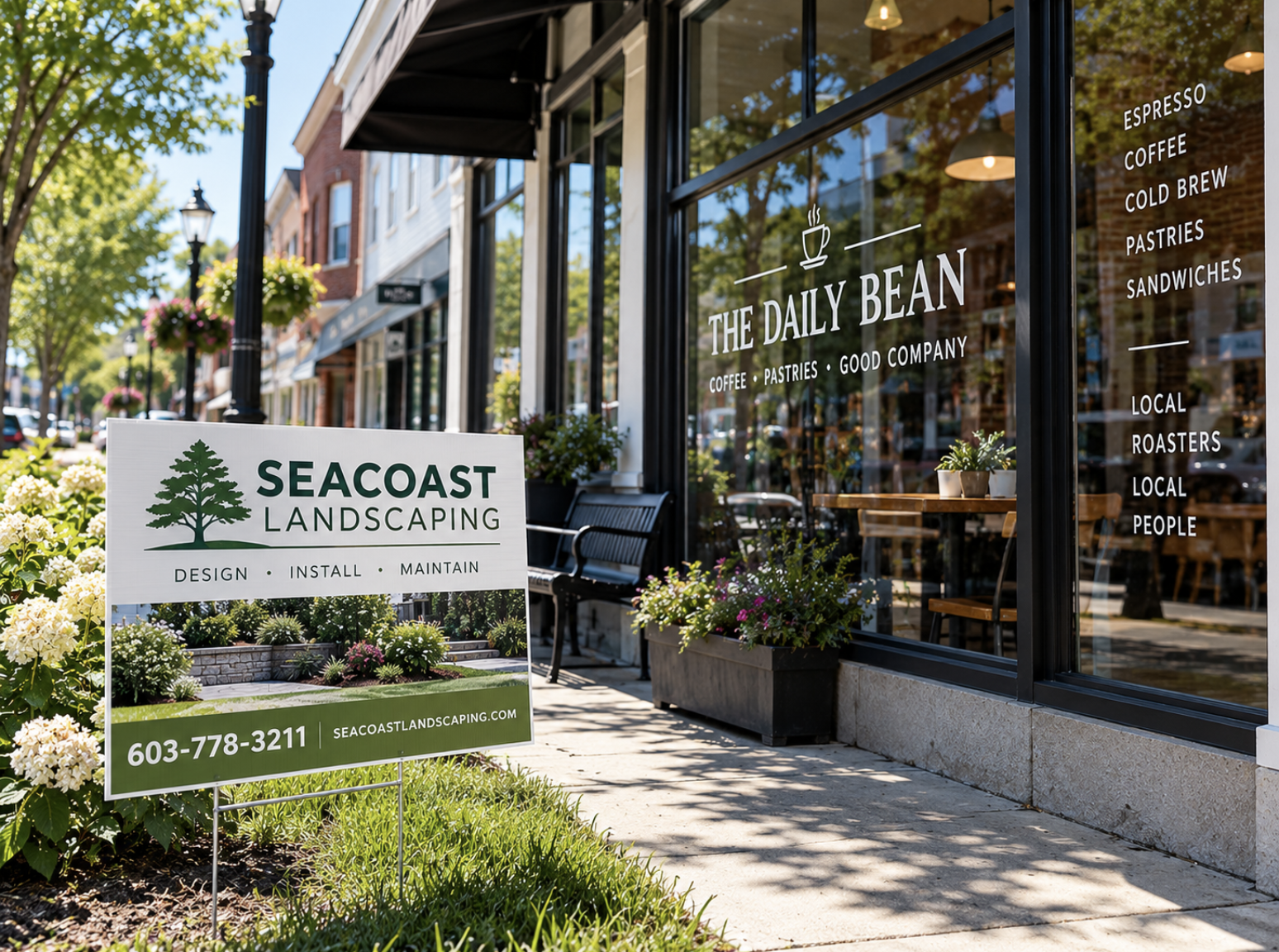
For local businesses, visibility plays an important role in attracting customers and building recognition within the community. While websites, search engines, and digital advertising help people discover companies online, physical signage provides another valuable opportunity to connect with potential customers in the places they already visit.
A well-designed yard sign can introduce a contractor to homeowners in a neighborhood, promote an upcoming community event, or direct visitors toward a business location. Window graphics can transform an otherwise ordinary storefront into a more recognizable, informative, and professional space.
Both options allow businesses to communicate directly with people who live, work, shop, or travel through their service areas. However, choosing effective signage involves more than placing a logo on a printed surface. Size, placement, readability, materials, local regulations, and the intended lifespan of the display should all influence the final design.
For businesses throughout the Seacoast of New Hampshire and surrounding New England communities, thoughtfully planned signs and window graphics can complement other marketing efforts while reinforcing a recognizable local presence.
Here's how to determine which option makes sense for your business and how to get the most from your printed signage.
1. Why Physical Signage Still Matters for Local Businesses
Digital marketing is an important part of modern business promotion, but physical signage serves a different purpose. Rather than relying on someone to search for a product or service online, signs communicate with people who are already near a business, event, or project location.
For example, a homeowner walking through their neighborhood might notice a contractor's yard sign outside a nearby property. A customer passing a storefront may discover a seasonal promotion through a window display, while someone arriving at a community fundraiser might rely on printed directional signs to find the entrance.
These interactions happen in the physical environment, often when people are already familiar with the surrounding location.
Effective signage can support several objectives:
- Local brand recognition: Repeated exposure to a consistent business name, logo, and visual identity can make a company more recognizable.
- Business visibility: Storefront graphics and outdoor signs help people identify a location or understand what a business offers.
- Event promotion: Temporary signs can communicate upcoming activities, fundraisers, sales, and community announcements.
- Customer navigation: Directional signage helps visitors locate entrances, parking areas, registration points, and other important destinations.
- Marketing consistency: Coordinated signage reinforces the same branding used on websites, brochures, business cards, and promotional materials.
The most effective signage is not necessarily the largest or most elaborate. It is the signage that communicates the right information clearly in the environment where people will encounter it.
2. When Yard Signs Are a Good Marketing Choice
Yard signs are commonly associated with real estate listings and political campaigns, but their uses extend well beyond those applications.
For businesses and organizations, they can be a practical option for temporary promotions, project identification, event announcements, and local awareness.
Because yard signs are often encountered by pedestrians or passing motorists, their messaging should be brief and immediately recognizable.
Contractors and Home Service Businesses
Contractors, landscapers, painters, roofers, and other home service providers may use yard signs to identify a project location or promote their services within an established service area.
For example, a painting company completing work on a residential property might display a sign featuring its business name, logo, and contact information when permitted by the property owner.
This type of signage helps connect the company's name with visible work in the community.
However, sign placement should always respect property permissions and applicable local regulations.
Real Estate and Property-Related Services
Real estate professionals commonly use yard signs to identify available properties, open houses, and other relevant information.
In these applications, readability is particularly important because viewers may need to recognize a property status or contact details quickly.
Sign design should prioritize essential information while maintaining the agent's or company's established branding.
Community Events and Nonprofit Organizations
Yard signs can also support local fundraising events, charity activities, school programs, community celebrations, and other public announcements.
For a nonprofit promoting an upcoming fundraiser, a simple sign containing the event name, date, and website may be more effective than a crowded design featuring several paragraphs of information.
When multiple signs are being distributed throughout a community, consistent branding and messaging help create a unified campaign.
Temporary Business Promotions
Businesses may also use yard signs to draw attention to grand openings, seasonal offers, community partnerships, or other short-term announcements.
Because these promotions often have defined start and end dates, the signs should be easy to update or remove once the information is no longer relevant.
The key is to choose a format and message that reflect the location, audience, and intended duration of the display.
3. How Window Graphics Improve Storefront Visibility
Window graphics provide businesses with an opportunity to communicate directly through their storefronts or other suitable glass surfaces.
Depending on the design and intended application, they can help identify a business, explain its services, promote a special announcement, or reinforce its visual identity.
For storefronts located along busy shopping streets, in commercial plazas, or within pedestrian-friendly downtown areas, window graphics can help make the business more recognizable to people passing by.
Unlike smaller printed materials that customers take with them, window graphics become part of the physical presentation of the location.
Business Identification and Branding
A storefront should make it reasonably easy for visitors to identify the business occupying the space.
Window graphics may include a company logo, business name, service category, or other identifying information that complements existing signage.
For businesses with limited exterior signage space, a thoughtfully designed window display can provide another location for important branding.
The design should remain consistent with the company's broader visual identity rather than introducing unrelated fonts, colors, or logos.
Service and Product Information
Window graphics can also help customers understand what a business offers before entering.
For example, a professional service provider might use concise wording to highlight its primary services, while a retail store could feature selected product categories or an upcoming promotion.
Avoid presenting an exhaustive list of every service or product. Storefront messaging should be easy to scan, particularly when people are walking past.
Seasonal Promotions and Announcements
Temporary window displays can help communicate holiday promotions, special events, changes to business operations, or other time-sensitive information.
When planning seasonal graphics, consider how frequently the message will need to change.
An evergreen company logo and a limited-time promotion have different useful lifespans, which may influence the selection of materials and display approach.
Decorative and Privacy-Related Applications
Certain window graphic materials may also serve decorative or privacy-related purposes, depending on their characteristics and installation.
However, not every window material provides the same level of visibility, privacy, light transmission, or durability.
Businesses exploring these applications should discuss the intended effect and confirm suitable material options before ordering.
4. Design Signs for Their Actual Viewing Distance
One of the most common mistakes in signage design is creating artwork without considering how far away the audience will be when reading it.
A yard sign viewed from across a street requires a different design approach from a window graphic intended for customers standing directly outside a storefront.
The greater the viewing distance, the more important it becomes to prioritize larger typography, strong contrast, and concise messaging.
Keep the Main Message Simple
For most yard signs, the business name or primary message should be immediately apparent.
Trying to include a full service list, lengthy description, multiple social media accounts, and several calls to action can make the sign difficult to understand.
Instead, identify the information viewers need most.
A contractor's sign might prioritize the company name and contact information, while an event sign may focus on the event title, date, and location.
Use Readable Typography
Choose fonts that remain clear at the intended viewing distance.
Avoid overly decorative lettering, excessively thin typefaces, and crowded text arrangements.
Typography that looks attractive on a computer screen may become difficult to read when the sign is viewed outdoors or from a moving vehicle.
Maintain Strong Contrast
Clear contrast between text and background helps important information stand out.
Dark lettering on a light background, or appropriately contrasted light lettering on a dark background, can provide effective readability.
Be cautious when placing text over detailed photographs or complex patterns.
If a graphic includes a photograph, consider using a simpler area of the image or a solid background panel behind essential text.
Establish a Clear Visual Hierarchy
Not every detail needs equal visual emphasis.
The business name, promotional headline, or key instruction should usually be more prominent than secondary information.
A simple hierarchy helps people understand the message quickly without needing to study the entire design.
Elite Printing Group's Graphic Design Services can help businesses develop or prepare professional artwork for their printed marketing materials.
5. Choose Materials Based on Location and Intended Use
Yard signs and window graphics may be used in very different environments, so material selection should reflect how and where the finished product will be displayed.
For outdoor signage, weather exposure is an important consideration. Rain, wind, sunlight, and temperature changes can all affect the performance of certain materials over time.
The expected duration of the display also matters. A sign used for a weekend event may have different requirements from signage intended for repeated or extended use.
Depending on the project, commercial signage may involve corrugated plastic, rigid boards, specialty films, or other suitable printing materials. Each option has different characteristics and potential applications.
For window graphics, additional considerations may include the type of glass, lighting conditions, surface preparation, desired appearance, and whether the display is temporary or intended for longer-term use.
Some window materials are designed to be more transparent, while others create a more opaque appearance. The right choice depends on the intended effect and the specific application.
Before selecting materials, ask:
- Will the sign be displayed indoors or outdoors?
- How long is the material expected to remain in place?
- Will it be exposed to direct sunlight, rain, or wind?
- Does it need to be moved, stored, or reused?
- What surface or mounting method will be involved?
- Is the goal visibility, branding, privacy, or a temporary promotion?
The availability of specific materials and finishing options should be confirmed with your printing provider.
For signs, banners, posters, and other oversized promotional graphics, explore Elite Printing Group's Large Format Printing Services.
6. Consider Placement, Visibility, and Local Regulations
Even a professionally designed sign may be ineffective if it's placed where people can't see it clearly.
Before deciding on dimensions or final artwork, consider the physical environment where the sign will be displayed.
A sign located near landscaping, parked vehicles, or other visual obstructions may be difficult to notice. Likewise, a window graphic positioned behind merchandise or in a poorly lit area may not communicate its intended message effectively.
For yard signs, think about visibility from sidewalks and nearby approaches while ensuring the display doesn't interfere with pedestrian access, driver sightlines, or other safety considerations.
For window graphics, consider the natural viewing angle and whether glare, reflections, or interior lighting may affect readability.
It's also important to review any applicable property rules, lease restrictions, municipal sign ordinances, or permit requirements before installing signage.
Requirements can vary significantly by municipality and property type. A display permitted in one location may be restricted in another.
Businesses should confirm relevant requirements with the appropriate property owner, venue, or local authority rather than assuming all signage can be installed without approval.
Installation methods should also be appropriate for the material and environment. When professional installation is necessary, arrangements should be confirmed separately with a qualified provider.
7. Keep Your Signage Consistent With Your Brand
A yard sign or storefront graphic may be one of the first physical impressions a potential customer has of your business.
That makes consistency with your existing branding especially important.
If your website, business cards, brochures, and exterior signage all use different colors, typography, or logo variations, customers may have a harder time recognizing them as part of the same business.
Establishing a consistent visual identity helps connect these marketing materials.
For example, a local business might use the same approved logo and color palette across its yard signs, printed postcards, storefront graphics, and promotional brochures.
The individual layouts can differ based on the format, but the overall presentation should remain recognizable.
When preparing artwork, use current logo files and approved brand assets whenever possible. Low-resolution images taken from websites or screenshots may not reproduce well when enlarged.
High-quality vector graphics are often preferable for logos because they can generally be scaled without losing sharpness.
Consistent branding doesn't mean placing every element in exactly the same position. It means adapting a recognizable identity to different formats while preserving the important visual characteristics.
8. Coordinate Signs With Other Local Marketing Materials
Yard signs and window graphics can be effective on their own, but they may also support broader marketing efforts.
For example, a business announcing a grand opening could use window graphics to attract attention at the location, yard signs where permitted to support local awareness, and promotional postcards to communicate the event to relevant households.
A contractor might coordinate project signage with business cards and brochures that customers can take home.
A community organization promoting a fundraiser could use outdoor signs alongside flyers, printed programs, and event banners.
The advantage of combining formats is that each serves a different purpose.
Large-format signage helps communicate with people in a physical location, while smaller printed materials can provide more detailed information that customers may keep or share.
When planning a campaign, consider whether the message should also appear in:
- Business cards and company brochures.
- Promotional postcards.
- Printed flyers and handouts.
- Event banners and posters.
- Direct mail campaigns.
- Other appropriate marketing materials.
Coordinating these pieces can create a more recognizable campaign and help maintain consistent information across multiple customer interactions.
Businesses planning a broader promotion can explore Elite Printing Group's Small Format Printing and Direct Mail Services alongside their large-format printing needs.
9. Know When to Update or Replace Your Signage
Printed signs should accurately represent the business, promotion, or event they're intended to support.
Over time, certain materials may become outdated because of changes to contact information, business branding, service offerings, or promotional details.
Temporary signage containing specific dates or offers should be reviewed and removed or updated after the information is no longer relevant.
More permanent branding materials should also be evaluated periodically for readability, physical condition, and accuracy.
A sign with faded graphics, damaged edges, or outdated contact details may create a less professional impression than intended.
When reviewing existing signage, ask whether it still communicates the right message and whether the design remains consistent with your current branding.
Updating a sign doesn't always require changing the entire visual identity. Sometimes the most valuable improvement is simplifying the message, replacing outdated information, or selecting a material better suited to the display environment.
Regular reviews can help businesses maintain a professional appearance and avoid distributing conflicting information through their physical marketing materials.
10. What to Include When Requesting a Signage Quote
Before contacting a commercial printer, gather the basic details of your signage project.
Providing clear specifications can help your printing partner understand the intended application and discuss suitable options.
Useful information includes:
- Product type: Yard sign, window graphic, banner, poster, or another form of signage.
- Approximate dimensions: The intended width and height of the finished product.
- Quantity: How many signs or graphics you expect to need.
- Display environment: Whether the material will be used indoors, outdoors, or in a partially protected location.
- Expected duration: Whether the sign is intended for a short-term event, recurring use, or an extended display.
- Artwork status: Whether you already have a completed design or need assistance preparing one.
- Installation considerations: Any known mounting, surface, or property requirements.
- Deadline: When you need the finished materials.
- Delivery preferences: Whether the order will be picked up or shipped.
You don't need to know every technical specification before reaching out.
If you're unsure which material or size is appropriate, describe how the finished sign will be used and where it will be displayed.
This information provides a useful starting point for discussing the project.
Choosing the Right Signage for Your Local Business
Yard signs and window graphics offer different but complementary opportunities to improve local visibility.
Yard signs are often well suited for project identification, community events, temporary announcements, and promotional messages. Window graphics can help businesses strengthen their storefront branding, communicate services, and display information directly at their locations.
Neither option is automatically better than the other. The right choice depends on your audience, display environment, intended duration, and communication goals.
In many cases, a coordinated combination of signage and other printed marketing materials can support a more complete local marketing strategy.
The most important considerations are clear messaging, readable design, consistent branding, and materials appropriate for the intended use.
Explore Large Format Printing With Elite Printing Group
Since 2006, Elite Printing Group has provided commercial printing, graphic design, and personalized service to businesses and organizations. Based in the Seacoast of New Hampshire, we serve customers throughout New England and offer nationwide shipping.
Whether you're planning storefront graphics, promotional signage, event displays, or another large-format printing project, our team can help you discuss your needs and explore suitable printing options.
Learn more about our Large Format Printing Services or Get a Quote to start planning your next project.