
How Mailing List Quality and Personalization Affect Direct Mail
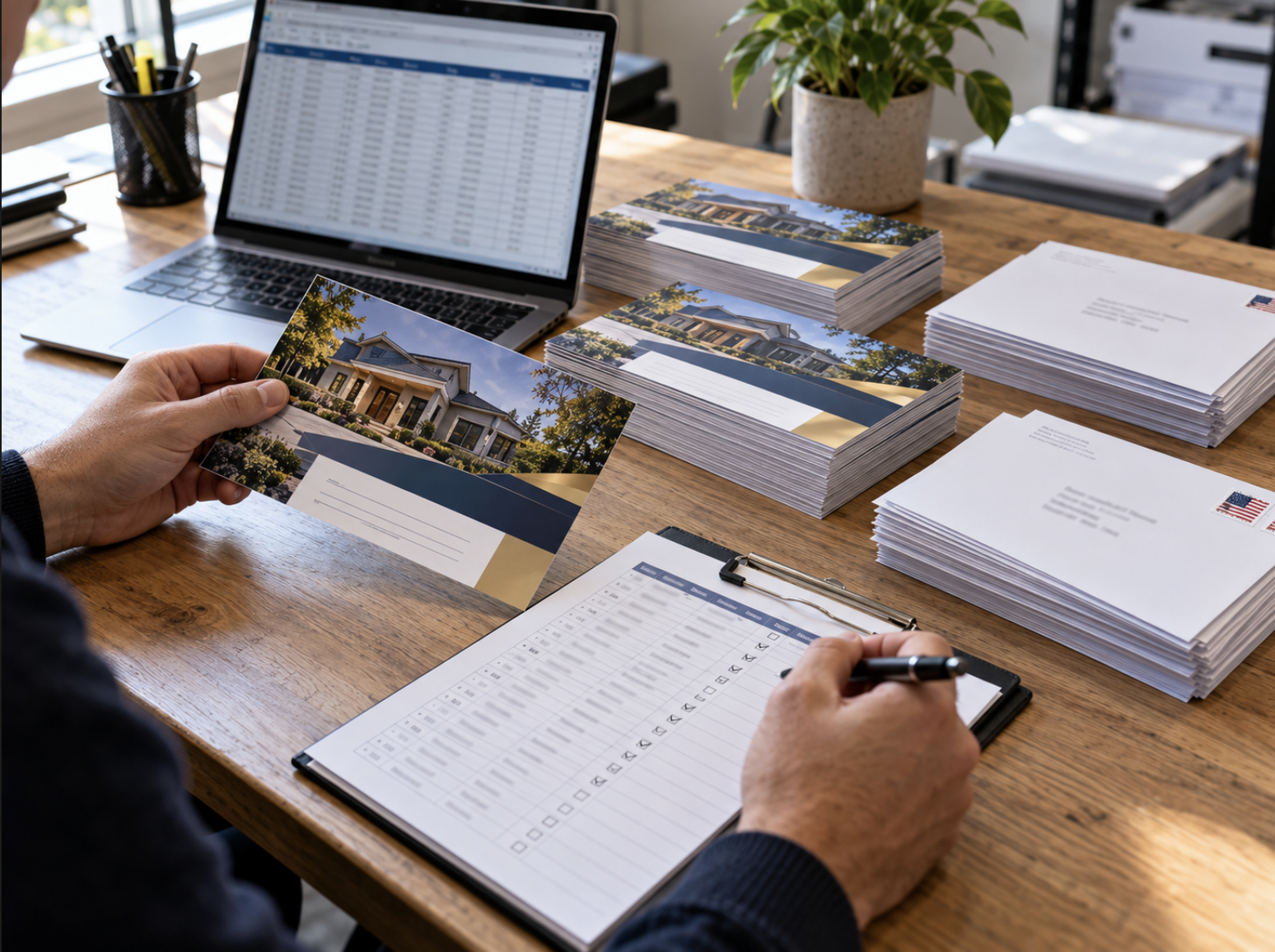
When businesses plan a direct mail campaign, much of the attention naturally goes toward the design of the postcard, brochure, or promotional mailer. While attractive graphics, professional printing, and compelling messaging are important, the success of a mailing also depends on something less visible: the quality of the mailing list and how well the message connects with its intended audience.
Even the most professionally designed postcard may struggle to generate meaningful interest if it reaches people who have little reason to respond. Outdated addresses, poorly defined audiences, and generic messaging can also limit the effectiveness of a campaign before recipients have an opportunity to engage with it.
A thoughtful direct mail strategy considers who should receive the message, why the information is relevant to them, and how the printed piece can encourage an appropriate next step. By combining accurate mailing information with targeted messaging and professional design, businesses can create more purposeful campaigns and make better use of their marketing budgets.
Here's what to consider when building your next direct mail campaign.
1. Start With the Right Audience, Not Just the Right Design
Before choosing paper stock, postcard dimensions, or visual elements, identify the people your business is trying to reach. Understanding your audience helps shape everything from the offer and messaging to the geographic area and distribution method.
For a local business, location may be one of the most important considerations. A landscaping company serving the Seacoast of New Hampshire, for example, might focus on neighborhoods within its established service area rather than distributing materials across an unnecessarily broad region. A restaurant promoting a neighborhood event may benefit from concentrating its mailing around nearby households, while a professional service provider might target businesses that fit its ideal customer profile.
Existing customers and prospective customers may also require different approaches. A mailing to established clients could highlight a new service, seasonal announcement, or upcoming event. A campaign aimed at people unfamiliar with the company may need additional context, such as a brief introduction, service explanation, and clear reason to consider the business.
The most useful question to ask is not simply, "How many people can we mail to?" but rather, "Which recipients are most likely to find this information relevant?"
Defining the audience early helps prevent unnecessary distribution and creates a stronger foundation for the entire campaign.
2. Understand Why Mailing List Accuracy Matters
A mailing list is more than a collection of names and addresses. It is the foundation of how your printed materials reach their intended recipients, and its accuracy can influence both campaign costs and delivery outcomes.
Addresses can become outdated as people move, businesses relocate, and customer information changes. Duplicate entries may result in multiple copies being sent to the same household, while incomplete or incorrectly formatted information can create processing complications.
For businesses using customer records collected over several years, reviewing the information before launching a major campaign is particularly important.
Common mailing list issues include:
- Outdated addresses: Records that no longer reflect a recipient's current mailing location.
- Duplicate contacts: Multiple entries for the same person, household, or organization.
- Incomplete information: Missing apartment numbers, suite identifiers, or other required address details.
- Inconsistent formatting: Differences in abbreviations, address fields, and record organization.
- Irrelevant recipients: Contacts who fall outside the intended service area or target audience.
Depending on the mailing method, address verification, standardization, duplicate removal, and other list preparation processes may help improve data quality.
For larger campaigns, it's worth discussing mailing specifications and available list preparation options before finalizing production.
Businesses should also ensure that customer information is collected, maintained, and used in accordance with applicable privacy requirements and marketing rules. A mailing list should be both relevant to the campaign and appropriate for its intended use.
Taking time to review mailing data can help reduce avoidable waste and make campaign planning more predictable.
3. Segment Your Mailing List for More Relevant Messaging
Once you understand your audience and have reviewed the quality of your mailing data, the next step is deciding whether every recipient should receive the same message.
Audience segmentation involves dividing a mailing list into smaller groups based on relevant characteristics. These might include geographic location, existing customer relationships, business type, or interest in a particular service.
Rather than sending one generic promotion to everyone, businesses can tailor their messaging to the needs of different groups.
For example, a home improvement company might develop one postcard introducing its services to prospective customers and another highlighting seasonal maintenance options for existing clients. The overall branding could remain consistent while the headline, supporting message, and call to action reflect the recipient's relationship with the business.
Geographic segmentation can also be valuable. A company operating across several communities may want to feature location-specific details or emphasize services that are especially relevant to certain neighborhoods.
However, segmentation should serve a practical purpose. Creating numerous variations without a clear strategy can complicate production without necessarily improving the campaign.
The goal is to make each mailing more relevant, not simply more complicated.
Start with a manageable number of clearly defined audience groups and develop messaging that addresses a genuine reason for each group to respond.
4. Use Personalization to Make Direct Mail More Meaningful
Personalization is often associated with including someone's name on a postcard or letter. While that can make a piece feel more direct, effective personalization goes beyond addressing the recipient individually.
The strongest personalized messaging reflects the recipient's likely interests, relationship with the business, or reason for receiving the communication.
For example, an established customer might appreciate a reminder about a recurring service, while a new prospect may benefit from an introduction to the company's offerings. A business promoting an event in a particular community could emphasize the local connection rather than using identical messaging across every location.
Personalization can take several forms, including:
- Addressing recipients by name when accurate, appropriate information is available.
- Tailoring offers or messaging to relevant customer groups.
- Referencing a particular service area or community.
- Providing location-specific contact or event information.
- Directing recipients to a landing page related to the campaign.
Depending on the printing process and available customer data, variable data printing may allow certain text or design elements to change between individual printed pieces. However, the suitability and availability of this approach should be confirmed with the printing provider before planning a campaign around it.
It's equally important to recognize when personalization may be unnecessary. An overly familiar message or an unexpected reference to personal information can make recipients uncomfortable rather than engaged.
Keep personalization relevant, respectful, and consistent with applicable privacy expectations. The goal is to create a useful customer experience, not demonstrate how much information a business may possess.
5. Design Your Mailer Around the Audience and Message
Once the audience and messaging have been established, the design process becomes more focused.
An effective direct mail piece should immediately communicate what the recipient is looking at, why the message matters, and what action to take next.
For a postcard, this often means using a clear headline, a relevant visual, concise supporting information, and one prominent call to action. Brochures or larger mailers may provide additional room to explain services or present multiple pieces of supporting information.
The design should also reflect the audience's familiarity with the business.
A campaign introducing a company to new customers might prominently feature the business name, services, location, and contact details. A mailing to existing customers may focus more directly on a specific announcement or offer because the audience already recognizes the brand.
Regardless of the campaign, readability should remain a priority. Small type, low-contrast text, overly busy graphics, and competing calls to action can make it difficult for recipients to understand the message.
Production requirements also matter. Mailing panels, address placement, finished dimensions, and applicable postal specifications need to be considered before final artwork approval.
Businesses preparing promotional postcards, brochures, or other printed mailers can explore Elite Printing Group's direct mail services and graphic design services when planning their projects.
6. Give Recipients a Clear Reason to Respond
Reaching the right audience is important, but recipients still need to understand what they should do after reading the mailing.
A clear call to action connects the message to the campaign's intended objective. Depending on the business, that might mean requesting an estimate, scheduling an appointment, visiting a store, exploring a service, or registering for an event.
Avoid including too many competing instructions. A postcard that simultaneously asks someone to call, scan multiple QR codes, visit several web pages, and follow multiple social media accounts can dilute the primary message.
Instead, choose one main action and make it easy to complete.
For example, a contractor introducing a seasonal service could direct recipients to a relevant service page where they can request a quote. A retailer announcing a promotion could include the location, important offer details, and the applicable dates.
If a QR code is used, include enough context for recipients to understand where it leads. Providing a readable website address as an alternative can also make the information more accessible.
Make sure the destination matches the promise made in the printed piece. If the postcard promotes a particular service, sending someone directly to information about that service is generally more useful than requiring them to search through an unrelated page.
A focused message and clear next step can help the mailing serve its intended purpose.
7. Measure Campaign Performance and Apply What You Learn
Direct mail campaigns can be evaluated using several different measures, depending on their objectives.
A campaign designed to generate quote requests may focus on inquiries and resulting customers. An event announcement might be evaluated through registrations or attendance. A retail promotion could use a campaign-specific offer code to help identify responses.
Businesses may also consider using dedicated landing pages, trackable QR codes, or other campaign identifiers to better understand how recipients engage with the mailing.
These methods can provide useful information, but they don't capture every interaction. Someone might receive a postcard, remember the company, and contact it later through another channel. That interaction may not be directly attributed to the original mailing.
For this reason, results should be interpreted within the broader context of the campaign.
When reviewing performance, consider factors such as:
- Audience relevance: Did the mailing reach people likely to need the product or service?
- Mailing list quality: Were addresses accurate and appropriate for the campaign?
- Message clarity: Was the main offer or announcement easy to understand?
- Timing: Did the mailing arrive at a useful point in the customer's decision process?
- Call to action: Was the next step clear and convenient?
- Overall cost: Did the campaign produce results that made sense relative to the investment?
Avoid assuming that one campaign will provide definitive answers about every aspect of your marketing strategy. Timing, competition, seasonality, offer quality, and customer needs can all affect outcomes.
The most valuable approach is to use available information to identify reasonable improvements for future mailings.
8. Plan Your Printing and Mailing Timeline Early
Audience targeting, mailing list preparation, design, printing, and postal delivery are connected parts of the same process.
Leaving these decisions until the last minute can create unnecessary pressure, especially when a campaign is tied to a specific event, promotion, or seasonal deadline.
Begin by identifying when recipients should ideally receive the mailing. Then work backward to allow time for finalizing the audience, preparing mailing information, reviewing artwork, approving proofs, producing the materials, and completing any necessary mailing preparation.
Postal processing and delivery times can vary, so coordinate the schedule around realistic expectations rather than assuming a guaranteed arrival date.
If the campaign requires multiple audience segments or personalized versions, communicate those requirements early so the printing provider can evaluate the production approach.
A well-organized timeline helps ensure that the campaign's design, data, and distribution requirements are considered together rather than handled as separate last-minute tasks.
Bringing Audience, Design, and Printing Together
Effective direct mail starts long before the first postcard is printed. The quality of the mailing list, relevance of the message, clarity of the design, and timing of distribution all contribute to how well a campaign supports its intended objectives.
For businesses, this means thinking beyond the appearance of the finished piece. A professional design is valuable, but it becomes more purposeful when paired with accurate mailing information and an audience that has a genuine reason to engage.
By reviewing your mailing data, identifying relevant customer groups, using personalization thoughtfully, and evaluating campaign results, you can develop a more organized approach to direct mail marketing.
You don't need to create an overly complicated system to benefit from these principles. Even straightforward improvements to audience selection, list accuracy, and messaging can help make future campaigns more intentional.
Plan Your Next Direct Mail Campaign With Elite Printing Group
Since 2006, Elite Printing Group has provided commercial printing, graphic design, and direct mail services with an emphasis on personalized customer service. Based in the Seacoast of New Hampshire, we work with businesses throughout New England and offer nationwide shipping.
Whether you're preparing promotional postcards, customer announcements, or a larger direct mail initiative, our team can help you explore printing options and discuss the requirements of your project.
Learn more about our Direct Mail Services or Get a Quote to get started.