
When Should Businesses Start Planning Holiday Printing?
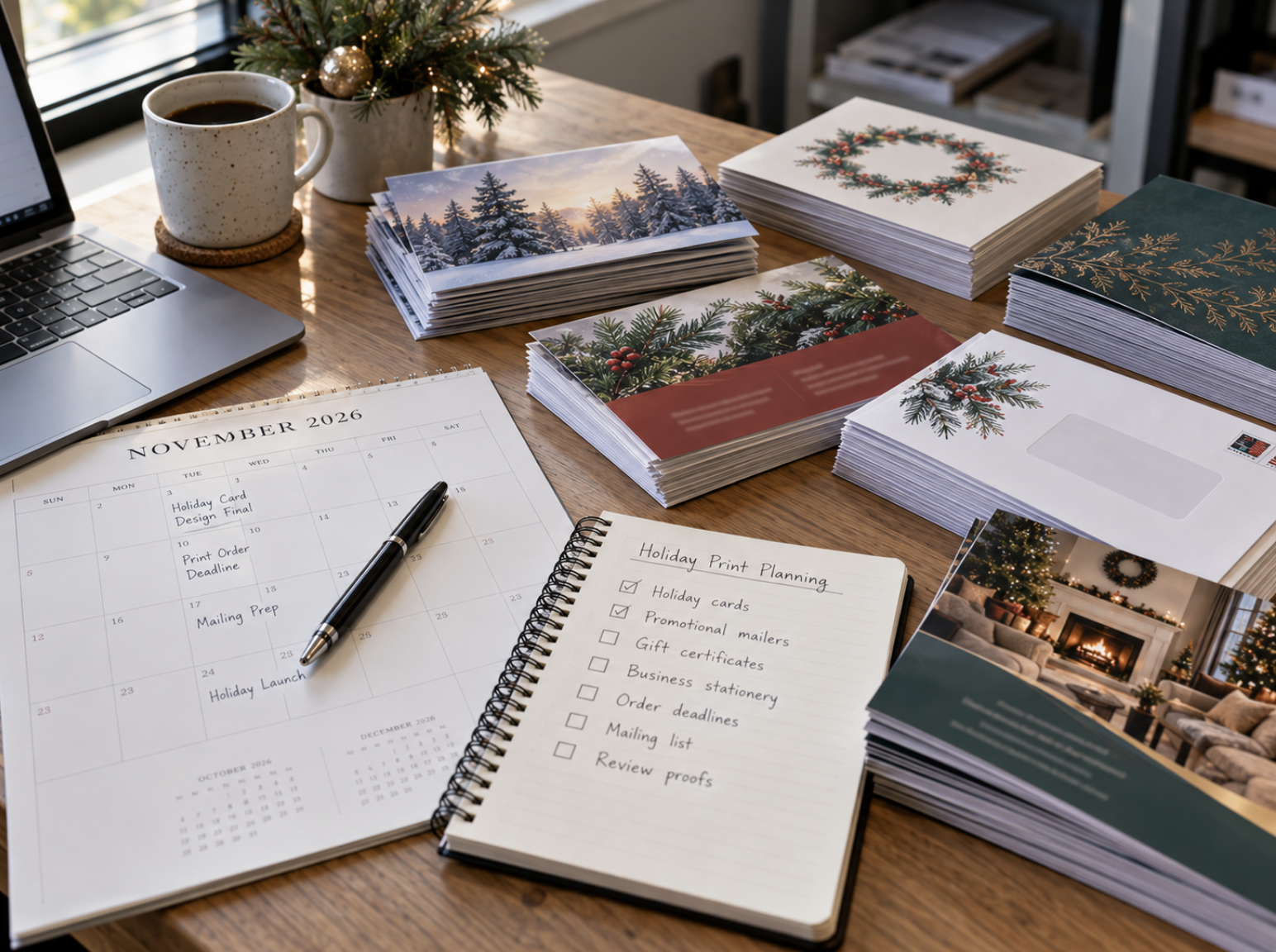
The holiday season is one of the most active times of year for many businesses. Retail promotions, customer appreciation initiatives, corporate events, seasonal marketing campaigns, and year-end communications all compete for attention as companies prepare to finish the year.
For businesses that rely on printed materials, this period can create additional planning challenges. Holiday greeting cards, promotional postcards, brochures, banners, event programs, and other materials may all be needed within a relatively short window.
While these projects can help businesses connect with customers and reinforce their brands, they require careful coordination. Artwork needs to be prepared, designs must be reviewed, printing specifications should be confirmed, and sufficient time needs to be allowed for production and distribution.
Waiting until the final days before an event or holiday can limit flexibility and make even relatively straightforward printing projects more difficult to coordinate.
The best time to start planning holiday printing is before the materials become urgent. For many businesses, beginning the discussion during the early fall provides an opportunity to organize upcoming needs, although the appropriate schedule depends on the specific project and its requirements.
Whether you're preparing customer greeting cards, seasonal direct mail, promotional signage, or materials for a year-end event, the following considerations can help you develop a more organized holiday printing plan.
1. Start Planning Holiday Printing Earlier Than You Think
One of the most common challenges with seasonal printing is underestimating how many steps take place between the initial idea and the finished product.
A project may begin with a simple request for holiday postcards, but the process can involve developing artwork, gathering approved brand assets, reviewing the message, selecting materials, confirming quantities, approving proofs, and coordinating delivery.
If the printed materials need to be mailed, additional preparation and postal processing may also need to be considered.
For businesses planning several holiday projects, these steps can overlap with other year-end responsibilities.
A practical approach is to begin identifying holiday printing needs during the early fall, particularly when materials are intended for November or December distribution.
This doesn't mean every project must be ordered months in advance. Straightforward products and more complex projects can have very different production requirements.
However, early planning gives your business more time to evaluate options before fixed event dates or mailing deadlines become urgent.
Think in Terms of the Final Delivery Date
Instead of asking only when an order should be placed, start by identifying when the finished materials must be available.
For example, a business planning a customer appreciation event in early December may need banners, invitations, and printed programs before the event itself.
If invitations must reach recipients ahead of time, their printing and mailing schedule will differ from the schedule for materials used on the event day.
Working backward from the required date helps establish realistic milestones for design approval, production, and distribution.
Because actual turnaround times vary, confirm the schedule with your printing provider before committing to a campaign deadline.
2. Identify All the Holiday Materials Your Business May Need
Holiday printing can involve much more than greeting cards.
Different industries and organizations have different seasonal needs, and creating a complete list early can help prevent important materials from being overlooked.
For example, a retail business may focus on promotional signage and postcards, while a professional service company may prioritize client appreciation cards and year-end correspondence.
A nonprofit organization could require printed invitations, event programs, sponsor recognition materials, and fundraising communications.
Common holiday printing projects include:
- Holiday greeting cards: Printed messages for customers, employees, business partners, and other professional relationships.
- Promotional postcards: Direct mail pieces announcing seasonal offers, events, or business updates.
- Retail signage: Printed banners, posters, and promotional displays communicating seasonal information.
- Invitations: Printed communications for holiday gatherings, customer appreciation events, or year-end celebrations.
- Event programs: Schedules and informational materials for organized holiday events.
- Brochures and flyers: Marketing pieces highlighting products, services, or seasonal announcements.
- Gift-related printed materials: Cards, certificates, or inserts where appropriate for the project.
- Thank-you cards: Year-end appreciation messages for customers, employees, and business partners.
Not every business needs every product.
The goal is to identify the materials that support your actual plans rather than producing seasonal items simply because other companies are doing so.
For smaller printed marketing pieces, businesses can explore Elite Printing Group's Small Format Printing Services.
For banners, posters, and other oversized promotional displays, learn more about our Large Format Printing Services.
3. Build Your Holiday Printing Schedule Around Key Milestones
A well-organized holiday printing plan should account for the different stages of a project rather than focusing only on the date the order is submitted.
The following example illustrates how a business might organize its planning process for a November or December campaign. These are general planning stages, not guaranteed production timelines.
Early Fall: Identify Projects and Gather Information
Begin by reviewing upcoming promotions, customer communications, business events, and other seasonal activities.
Determine which materials will be needed and establish approximate quantities, budgets, and delivery dates.
This is also a good time to gather logos, photographs, approved messaging, and any other information required for the artwork.
Before Production: Develop and Review Artwork
Once the project details are established, prepare the design and review it with the appropriate decision-makers.
If multiple departments or stakeholders need to approve the material, account for the time required to collect feedback.
Try to consolidate revisions so the design process doesn't become unnecessarily repetitive.
After Artwork Approval: Confirm Printing Specifications
Review finished dimensions, paper preferences, quantities, finishing requirements, and delivery arrangements with your printing provider.
For direct mail projects, discuss applicable mailing specifications and preparation needs.
Confirm that the final artwork is suitable for production before authorizing the order.
Before the Campaign or Event: Coordinate Delivery and Distribution
Determine when the materials need to arrive and who will be responsible for distributing or displaying them.
For events, this may include transporting programs, installing approved signage, or organizing promotional handouts.
For mailed campaigns, remember that printing completion and postal delivery are separate considerations.
The important principle is to create enough room between each milestone for review, production, and unexpected adjustments.
4. Plan Holiday Direct Mail Before the Mailing Date Becomes Urgent
Holiday direct mail can be a useful way for businesses to communicate seasonal offers, customer appreciation messages, special events, or other year-end announcements.
However, a successful mailing requires coordination between the printed design, intended audience, mailing information, and distribution schedule.
For example, a business promoting a December event needs to consider when recipients should receive the invitation, not simply when the postcards will be printed.
A promotional offer with a limited expiration date also needs enough time for recipients to receive and respond to the message.
Define the Purpose of the Mailing
Before preparing the design, determine what the campaign should accomplish.
Are you announcing a seasonal promotion, inviting customers to an event, expressing appreciation, or encouraging recipients to learn about a service?
The objective should guide the message, design, and call to action.
Review the Intended Audience
Consider whether the mailing is designed for existing customers, local prospects, business partners, or another relevant group.
The message should reflect the relationship between your business and its recipients.
Make sure mailing data is appropriate for the campaign and handled in accordance with applicable requirements.
Account for Postal Processing
Mailing schedules can be influenced by production requirements, postal processing, seasonal volume, and the selected mailing method.
Avoid assuming that every piece will arrive on a particular date unless an applicable service specifically provides that commitment.
If timing is important, discuss the requirements early and allow a reasonable planning buffer.
Elite Printing Group offers Direct Mail Services for businesses preparing printed mailing campaigns.
5. Keep Holiday Designs Consistent With Your Brand
Holiday marketing offers opportunities to introduce seasonal colors, festive imagery, and different messaging into your materials.
However, adding a holiday theme shouldn't mean abandoning the visual identity customers already recognize.
A professionally designed holiday card or promotional postcard should still feel connected to your business.
For example, a company with an established logo, color palette, and typography can incorporate seasonal accents while preserving its core brand elements.
This helps printed materials remain recognizable even when the overall design becomes more festive.
Use Seasonal Elements With Purpose
Holiday imagery should complement the message rather than overwhelm it.
A customer appreciation card may benefit from a restrained, elegant appearance, while a retail promotion might use more energetic colors and graphics.
The right design depends on the audience, brand personality, and intended use.
Maintain Consistency Across Multiple Materials
If your campaign includes greeting cards, direct mail postcards, brochures, and promotional signage, consider coordinating the designs.
The materials don't need to be identical, but consistent colors, typography, logos, and messaging help create a unified presentation.
Remember That Readability Still Matters
Decorative fonts and detailed backgrounds can add visual interest, but essential information should remain easy to read.
Event dates, promotional terms, contact information, and calls to action deserve clear visual emphasis.
Elite Printing Group's Graphic Design Services can help businesses develop or prepare artwork for printed marketing materials.
6. Write Different Messages for Promotions and Customer Appreciation
Not every holiday communication should sound like a sales advertisement.
Businesses often use the season to express appreciation to customers, strengthen professional relationships, and communicate year-end updates.
A printed greeting card sent to a long-standing client has a different purpose from a postcard promoting a seasonal sale.
The tone and structure of the message should reflect that difference.
Customer Appreciation Cards
When expressing appreciation, focus on sincerity and clarity.
A professional message might thank customers for their continued support, acknowledge the relationship, and offer appropriate seasonal or year-end wishes.
The design doesn't need to contain a lengthy message or a prominent sales pitch.
In many cases, a thoughtful note and recognizable branding are sufficient.
Promotional Postcards
A seasonal promotion should communicate the offer and next step clearly.
Recipients should understand what is being promoted, whether any restrictions apply, and when the offer is available.
Avoid including vague discounts, misleading urgency, or conditions that are difficult to locate.
Event Invitations
Holiday event invitations should emphasize the information recipients need to participate.
This typically includes the event name, date, time, location, and any registration or response instructions.
If a QR code is provided, explain where it leads and test it before printing.
The most effective message is the one that accurately serves the purpose of the communication.
7. Choose Paper Stocks and Finishes Based on the Project
The paper and finish you select can influence how holiday printing materials look and feel.
For example, a customer appreciation card may call for a different presentation than a high-volume promotional flyer.
Paper weight, coating, texture, and finishing should reflect both the intended appearance and the practical way recipients will use the material.
Consider the Desired Presentation
A heavier cardstock can provide a more substantial feel for certain cards and invitations, while lighter paper may be appropriate for informational materials.
Matte and gloss finishes also create different visual impressions.
A matte surface generally produces less glare and may complement an understated design, while gloss can emphasize the appearance of certain photographs and colorful graphics.
However, the exact effect depends on the stock and printing process.
Consider Whether the Material Needs to Be Written On
Some holiday cards or event materials may require handwritten messages, signatures, or notes.
Certain coated or laminated surfaces may be less convenient for handwriting, so discuss this requirement before selecting paper.
Review Samples When Practical
A design displayed on a monitor may look different when printed.
When color, texture, or finish is especially important, reviewing suitable physical samples can help you make a more informed decision.
The availability of individual stocks and finishing options should be confirmed for the specific project.
8. Estimate Quantities Without Overordering
Holiday printing often involves materials with a limited useful lifespan.
A promotional postcard advertising a December sale may have little value once the offer ends. Event invitations and printed programs can also become outdated immediately after the event.
For this reason, quantity planning deserves particular attention.
Begin by estimating how many pieces you'll realistically need based on the intended audience and distribution method.
A direct mail campaign may use the planned mailing audience as a starting point, while an event organizer could estimate quantities based on expected attendance and the number of materials distributed per person.
Don't Focus Only on Unit Price
Larger quantities may reduce the average cost per piece for certain products, depending on their specifications and production method.
However, a lower unit price doesn't automatically create a better overall value if many pieces go unused.
Consider the total project cost alongside actual expected demand.
Separate Evergreen Materials From Seasonal Content
Some printed materials may remain useful after the holiday season.
For example, a general company brochure without seasonal references could potentially be used throughout the year.
A promotional flyer containing an expiration date cannot be reused in the same way.
When appropriate, keeping evergreen information separate from time-sensitive messaging can help businesses avoid unnecessary reprinting.
Allow for Practical Distribution Needs
If printed materials will be used at several events or locations, coordinate the expected quantities before placing an order.
The goal is to have enough available without building excessive inventory of short-lived materials.
9. Remember the Practical Details of Shipping and Distribution
Holiday printing planning doesn't end when the artwork is approved.
Businesses also need to consider how their printed materials will reach their intended destination.
A company preparing holiday cards for clients may need time to organize recipients and mailing information. A retailer ordering promotional signage may need the materials delivered before a planned sale or event.
Organizations hosting holiday gatherings may need to coordinate printed programs, banners, and handouts with venue setup arrangements.
When requesting a quote, explain whether the materials will be picked up, shipped, or prepared for mailing.
Also clarify the required arrival date rather than only mentioning when the project needs to be printed.
Shipping conditions, production schedules, seasonal demand, and other logistical factors can affect timing.
Elite Printing Group serves customers throughout New England and offers nationwide shipping, but specific deadlines and delivery arrangements should be confirmed for each project.
10. Review Every Detail Before Approving Holiday Artwork
One of the easiest ways to avoid seasonal printing problems is to establish a careful final review process.
Holiday materials frequently contain information that changes or becomes irrelevant after a particular date.
Incorrect event times, outdated promotional details, misspelled names, or broken QR codes can create confusion and may require costly corrections after printing.
Before approving the final artwork, verify:
- Business and organization names.
- Customer or recipient information, when applicable.
- Event dates, times, and locations.
- Promotional prices, restrictions, and expiration dates.
- Phone numbers and email addresses.
- Website URLs and QR code destinations.
- Sponsor or partner names.
- Company logos and approved brand colors.
- Finished dimensions and printing specifications.
- Mailing or delivery requirements.
If multiple employees or stakeholders are involved, designate one person to coordinate the final review.
It's also helpful to inspect the exported artwork rather than relying exclusively on the original design file.
For projects involving several printed pieces, ensure the information is consistent across cards, postcards, banners, and other materials.
A careful review before production can help prevent avoidable errors from being repeated across an entire order.
Common Holiday Printing Mistakes to Avoid
Even experienced businesses can run into problems when seasonal deadlines approach.
Some of the most common issues include:
Waiting too long to begin: Starting after the campaign timeline is already tight may limit available options and leave little room for revisions.
Underestimating design time: Gathering logos, writing copy, obtaining approvals, and preparing artwork can require more coordination than expected.
Ordering too many time-sensitive materials: Excess inventory may become unusable after an event or promotion ends.
Using inconsistent branding: Seasonal designs should still reflect the company's established visual identity.
Overlooking postal requirements: Direct mail campaigns require attention to mailing specifications and delivery planning.
Failing to test QR codes and links: Broken destinations can prevent customers from responding to a promotion or invitation.
Assuming a guaranteed turnaround: Production and delivery schedules should be confirmed rather than estimated without consultation.
Skipping the final proof review: Small errors can become significant when printed across a large quantity of materials.
Most of these challenges can be reduced through early planning, clear communication, and careful review.
Holiday Printing Planning Checklist
Use this checklist to help organize your business's seasonal printing needs.
Initial Planning
- Identify holiday promotions, events, and customer communications.
- List the printed materials required for each activity.
- Establish the approximate budget and expected quantities.
- Determine when each product must be available.
- Assign responsibility for artwork and final approval.
Design and Content
- Gather approved logos, images, and brand assets.
- Prepare accurate promotional or appreciation messaging.
- Maintain consistent branding across materials.
- Confirm paper, size, and finishing preferences.
- Review readability and contact information.
Direct Mail and Distribution
- Identify the intended mailing audience, if applicable.
- Review mailing data and relevant requirements.
- Confirm mailing preparation and postal considerations.
- Determine pickup or shipping arrangements.
- Discuss production and delivery deadlines in advance.
Final Approval
- Proofread all text and important information.
- Verify dates, offers, and promotional restrictions.
- Test QR codes and website links.
- Confirm final quantities and specifications.
- Review and approve the finished artwork before production.
Not every business will need every item on this list. The purpose is to establish a practical process that reflects your actual holiday marketing needs.
A More Organized Approach to Holiday Printing
Holiday printing doesn't need to become a last-minute challenge.
By identifying projects early, planning around required delivery dates, coordinating design approvals, and choosing materials based on their intended use, businesses can create a more manageable production process.
The right planning schedule depends on the complexity of the project, the number of materials involved, and how they will be distributed.
For many businesses, beginning preparations in early fall provides a helpful opportunity to review needs before November and December deadlines approach.
Whether you're preparing a simple customer greeting card or coordinating a larger seasonal marketing campaign, thoughtful planning can help ensure that your printed materials support the message you want to communicate.
Plan Your Holiday Printing With Elite Printing Group
Since 2006, Elite Printing Group has provided commercial printing, graphic design, and personalized service to businesses and organizations. Based in the Seacoast of New Hampshire, we serve customers throughout New England and offer nationwide shipping.
Whether you're preparing holiday cards, promotional postcards, event materials, or seasonal signage, our team can help you discuss your project requirements and explore printing options suited to your needs.
Learn more about our Small Format Printing Services, Direct Mail Services, and Large Format Printing Services, or Get a Quote to start planning your project.