
Flyers, Brochures, or Postcards: Which Is Right for Your Business?
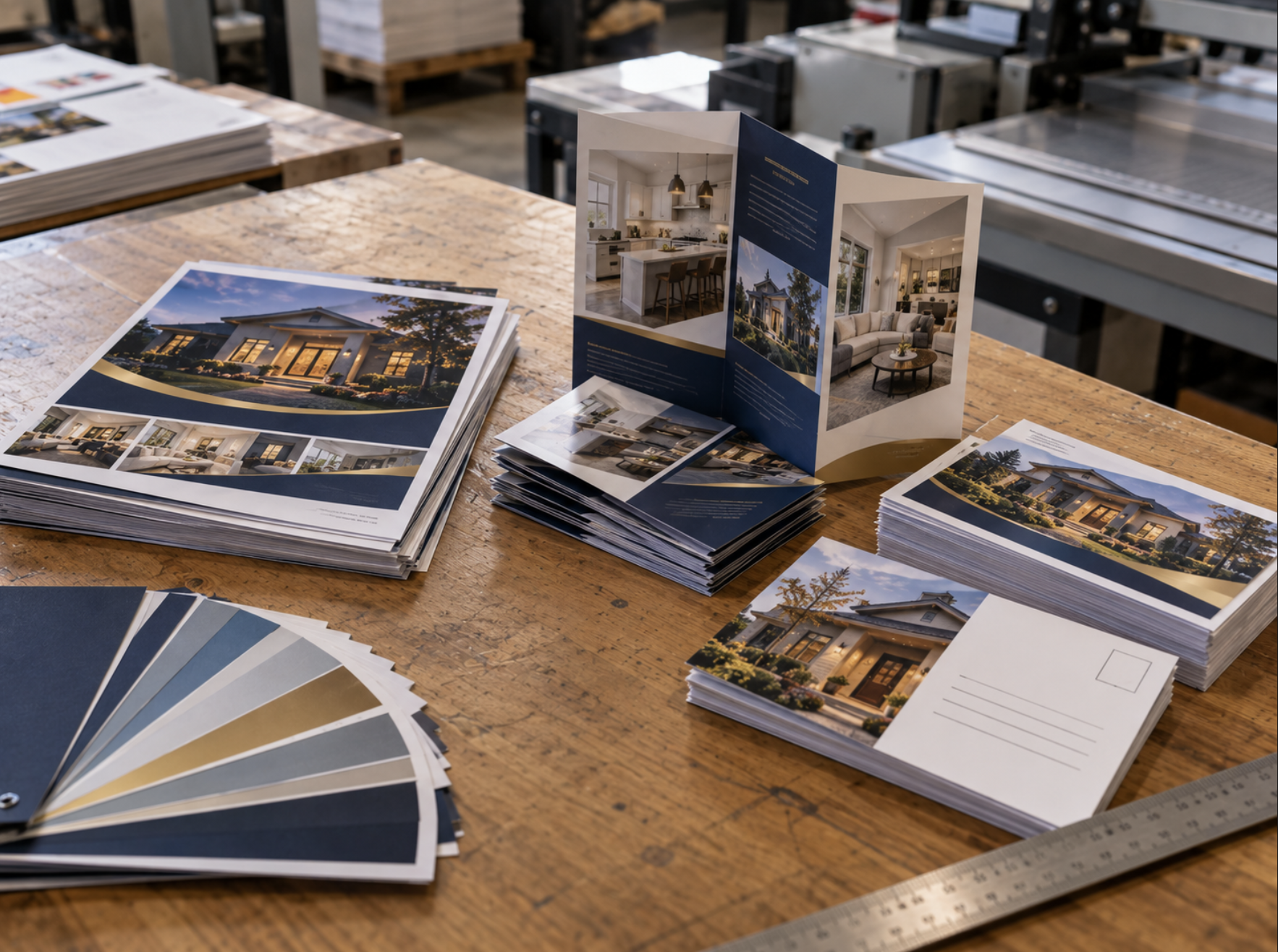
When planning printed marketing materials, businesses often face a straightforward question: Should we use flyers, brochures, or postcards?
Each format can communicate information effectively, but they serve different purposes. A flyer may be the right choice for promoting an upcoming event, while a brochure provides more room to explain services or products. A postcard can deliver a focused message through direct mail or serve as a compact promotional handout.
Choosing the right format isn't simply about appearance or printing cost. It's about understanding what you want to communicate, who needs to receive the information, and how you expect people to respond.
For businesses throughout New Hampshire and New England, printed marketing materials remain useful for community events, customer communications, sales presentations, seasonal promotions, and local outreach.
However, the most effective approach is to select a format that supports the actual purpose of the campaign rather than treating every printed product as interchangeable.
This guide explains the differences between flyers, brochures, and postcards, when each format makes sense, and what to consider before placing your next commercial printing order.
1. Understanding the Differences Between Flyers, Brochures, and Postcards
Flyers, brochures, and postcards are all common forms of small-format commercial printing.
Although they can sometimes be used for similar purposes, their physical characteristics influence how information is presented and distributed.
A flyer is typically a flat printed sheet intended to communicate information quickly. It may be printed on one or both sides and is commonly used for announcements, promotions, and events.
A brochure generally provides a more structured way to present information. Brochures may be folded into panels or produced in other suitable formats, giving businesses room to organize services, products, and company information.
A postcard is usually a compact, relatively sturdy printed piece that communicates a focused message. Postcards are particularly associated with direct mail but can also be distributed at events or used as promotional handouts.
Flyers vs. Brochures vs. Postcards: Quick Comparison
| Feature | Flyers | Brochures | Postcards |
|---|---|---|---|
| Main purpose | Quick announcements and promotions | Detailed information and service explanations | Focused messages and direct outreach |
| Typical layout | Flat sheet | Often folded or multi-panel | Compact, usually flat |
| Amount of content | Short to moderate | Moderate to detailed | Usually concise |
| Common distribution | Events, counters, handouts | Meetings, offices, events | Direct mail, handouts, customer outreach |
| Design priority | Immediate clarity | Organization and reading flow | One clear message and call to action |
| Common applications | Events, promotions, notices | Service guides, company overviews | Offers, invitations, reminders |
These are general differences. Actual dimensions, paper choices, and production specifications depend on the project and printing provider.
2. When Flyers Are the Best Choice
Flyers are useful when a business needs to communicate a relatively simple message to a specific audience.
They are commonly used for event promotions, announcements, seasonal sales, informational handouts, and community outreach.
Because flyers are generally presented as flat sheets, they encourage a straightforward design that readers can understand without opening folds or navigating multiple panels.
For example, a local organization promoting a fundraising event might create a flyer featuring the event name, date, location, a brief description, and registration information.
Similarly, a retail business could use flyers to communicate an upcoming promotion or announce a special event.
Advantages of Flyers
Flyers provide several practical benefits.
They offer enough room for a prominent headline, supporting details, and a clear call to action without requiring a complicated layout.
They can also be distributed in several ways, including at business locations, during events, or through other appropriate handout methods.
Because the format is relatively straightforward, it may be suitable for messages that don't require extensive explanation.
What Makes an Effective Flyer?
The most useful flyer designs establish a clear visual hierarchy.
The headline should communicate the main announcement, followed by the essential details and the next step.
For an event flyer, that may include the date, time, location, and registration instructions.
For a promotion, the most important information might be the product or service, the offer, and any applicable conditions.
Avoid filling the entire page with lengthy paragraphs or multiple competing messages.
A flyer should help someone understand the primary purpose quickly.
When Flyers May Not Be Ideal
Flyers may be less appropriate when a business needs to explain several complex services, provide extensive product information, or organize content into distinct categories.
In those cases, a brochure may offer a more manageable presentation.
3. When Brochures Are the Better Option
Brochures are particularly useful when a business needs more space to explain what it offers.
Unlike a flyer focused on a single announcement, a brochure can organize multiple topics into a structured reading experience.
This makes brochures a practical option for businesses introducing their services, explaining processes, presenting product categories, or providing information that customers may want to review later.
For example, a professional services company might use a brochure to explain its primary offerings, describe its approach, and provide contact information.
A hospitality business could use a brochure to introduce accommodations, amenities, and visitor information.
A nonprofit organization might create a brochure describing its mission, programs, and ways supporters can get involved.
Brochures Allow Information to Be Organized
One of the main advantages of a brochure is the ability to divide content into logical sections.
A folded format can help guide readers from the introduction to supporting details and a final call to action.
However, that structure needs to be planned carefully.
A brochure with too many paragraphs or unclear panel organization can become difficult to follow.
The goal is to provide more information without overwhelming the reader.
Common Brochure Folding Styles
Several folding approaches are used in commercial printing, depending on the intended layout and production requirements.
Bi-fold brochures generally fold a sheet into two sections, creating a booklet-like arrangement.
Tri-fold brochures divide a sheet into three panels, providing several areas for organizing information.
Other folding configurations may be appropriate for specific projects.
The exact dimensions and panel allowances depend on the folding method and should be confirmed before artwork is finalized.
What Makes an Effective Brochure?
A strong brochure usually includes a clear cover message, recognizable branding, logical section headings, readable body text, and a clear next step.
Photography and graphics can support the information, but they shouldn't distract from important content.
For service-based businesses, it's often better to explain the primary offerings clearly than to fill every panel with promotional language.
When Brochures May Not Be Necessary
If you're promoting only one simple announcement, a brochure may provide more space than the message requires.
In those situations, a flyer or postcard might communicate the information more directly.
4. When Postcards Make the Most Sense
Postcards are well suited for businesses that want to deliver a concise message in a compact format.
They're commonly used for customer announcements, promotional offers, event invitations, reminders, and direct mail campaigns.
Unlike brochures, postcards generally aren't intended to communicate extensive information.
Their strength lies in presenting one primary idea and giving the recipient a clear next step.
For example, a local business announcing a grand opening might use a postcard featuring the business name, event details, location, and website.
A service company could use postcards to introduce an offering to a relevant audience, while a retailer might promote a seasonal event or limited-time offer.
Why Postcards Work Well for Focused Messaging
A postcard encourages the business to prioritize its most important information.
The recipient should be able to recognize the message, understand the relevant benefit, and identify how to respond.
This makes postcards a useful starting point when the campaign objective is specific.
Postcards and Direct Mail
Postcards are particularly relevant to direct mail because they can carry promotional messages directly to intended recipients.
However, postcards used for mailing need to meet applicable postal requirements.
Dimensions, thickness, address placement, and other specifications can influence mailing eligibility and postage.
A postcard that works well as an event handout may not qualify for the same postal treatment as another postcard format.
Confirm mailing specifications before finalizing the design.
When Postcards May Not Be Ideal
A postcard may not provide enough space to explain a complex service or present several detailed product categories.
If the recipient needs substantial information before making a decision, a brochure or a relevant online destination may be more appropriate.
Elite Printing Group offers Direct Mail Services for businesses planning printed mailing campaigns.
5. Choose the Format Based on Your Marketing Objective
The easiest way to narrow the options is to identify what you want the customer to do after receiving the printed piece.
If the goal is to announce an event, a flyer may be sufficient.
If the goal is to explain a group of services, a brochure may be more appropriate.
If the goal is to deliver a focused offer or announcement through the mail, a postcard may be a practical option.
Scenario: Promoting a Community Event
A business sponsoring a local fundraiser may need to communicate the event name, date, location, and registration details.
A flyer could present those details clearly and be distributed through appropriate local channels.
If the event is being promoted to a specific mailing audience, a postcard may also be worth considering.
Scenario: Introducing a Professional Service
A company offering several related services may need to provide more context than a single short advertisement allows.
A brochure can organize those services into separate sections, helping prospective customers understand the available options.
Scenario: Announcing a Seasonal Promotion
A retailer promoting a defined seasonal offer may benefit from the focused structure of a postcard or flyer.
The choice depends largely on whether the materials will be handed out, displayed, or mailed.
Scenario: Preparing for a Trade Show
A business attending a trade show may benefit from brochures that explain its offerings in more detail.
A smaller promotional card could provide a concise reminder or direct visitors to additional information online.
The right combination depends on how the company plans to engage with attendees.
6. Think About How the Materials Will Be Distributed
Distribution is one of the most important considerations when choosing a format.
A product that looks attractive may not be practical if it doesn't fit the way your business intends to deliver information.
Handouts and In-Person Distribution
Flyers and brochures are often useful when employees will personally distribute materials.
For example, a company representative may provide a brochure after discussing services with a prospective customer.
A flyer may be appropriate for an event announcement distributed at a local business or community gathering.
Front Desks and Business Locations
Businesses may keep brochures or informational flyers available for visitors to pick up.
In these situations, consider how the materials will be displayed, how frequently they'll be replenished, and whether the information will remain current.
Direct Mail Campaigns
Postcards are commonly associated with direct mail, but other suitable formats may also be used depending on the campaign.
If mailing is the intended distribution method, confirm the specifications before preparing artwork.
Events and Trade Shows
At events, different formats can serve complementary roles.
A flyer might announce an upcoming activity, while a brochure provides more substantial information about a business or organization.
A postcard could serve as a compact reminder containing a website address or relevant next step.
The goal is to match the format to the actual customer interaction.
7. Compare the Amount of Information You Need to Include
The amount of content is another important factor.
A common marketing mistake is trying to fit too much information into a format that isn't designed to accommodate it comfortably.
For example, a postcard containing several long service descriptions, multiple promotional offers, and extensive contact details may become difficult to read.
Similarly, a brochure with only one short sentence per panel may provide more space than necessary.
Before selecting a format, organize your content into three categories:
- Essential information: Details the reader must understand.
- Supporting information: Context that helps explain the message.
- Optional information: Details that may be better suited to a website or follow-up conversation.
This exercise can help you determine whether a simple flyer, more detailed brochure, or concise postcard is appropriate.
Let the Message Guide the Design
Don't choose a complex format simply because it appears more elaborate.
A short, clear message may be better suited to a single sheet.
Likewise, detailed information should be given enough room to remain readable and organized.
The best format supports the content rather than forcing the content into an unsuitable layout.
8. Consider Paper Stock, Finish, and Presentation
The choice between flyers, brochures, and postcards doesn't end with the layout.
Paper weight, coating, finish, and other material characteristics can influence the appearance and feel of the finished piece.
For example, a postcard may benefit from a stock with sufficient rigidity for its intended use, while a folded brochure requires paper and finishing choices appropriate for folding.
A flyer distributed during a short-term promotion may have different requirements from a brochure designed for repeated customer presentations.
Matte vs. Gloss
Matte finishes generally have lower reflectivity and may complement informational or text-heavy designs.
Gloss finishes can produce a more reflective appearance and may emphasize colorful imagery.
However, the actual results depend on the specific paper and printing process.
For a detailed comparison, read our guide to Matte vs. Gloss Printing Finishes.
Paper Weight and Thickness
Heavier paper doesn't automatically make every printed product more effective.
The appropriate weight depends on the intended use, handling requirements, folding needs, and budget.
Specialty Finishing
Certain projects may involve additional finishing considerations, but availability varies by printing provider.
Discuss the intended presentation and production requirements before selecting specific options.
9. Design for Readability and Clear Communication
Regardless of the format, the printed piece needs to communicate its message clearly.
A professional design should help readers identify the main point, understand supporting details, and locate the next step without unnecessary effort.
Establish a Visual Hierarchy
Use headlines, subheadings, body text, and spacing to organize information.
The most important message should stand out.
Choose Legible Typography
Font sizes should be appropriate for the finished printed dimensions and intended audience.
Avoid shrinking text excessively to fit more content.
Use Strong Contrast
Important information should remain clear against its background.
Be cautious when placing text over detailed photographs or using colors with insufficient contrast.
Maintain Consistent Branding
Use approved logos, brand colors, and typography across related materials.
This helps printed pieces feel connected to the company's broader marketing efforts.
Keep the Call to Action Clear
Whether the next step is visiting a website, attending an event, contacting the business, or requesting information, make it easy to identify.
For businesses that need help developing artwork, Elite Printing Group offers Graphic Design Services.
10. Estimate the Right Printing Quantity
The quantity you order should reflect how the materials will be used.
A business preparing flyers for a weekend event may have a relatively short distribution window, while brochures containing general service information may remain useful for a longer period.
Postcard quantities for a direct mail campaign may be tied to the selected mailing audience.
Before placing an order, consider:
- How many people are expected to receive the material?
- How will the pieces be distributed?
- How long will the information remain accurate?
- Are there upcoming events or promotions that may increase demand?
- Will leftover materials be useful later?
- Is sufficient storage available?
Ordering larger quantities may reduce the average cost per piece for some projects, depending on production specifications.
However, the lowest unit price doesn't necessarily represent the best overall value if many materials remain unused.
A realistic estimate should balance expected demand, total cost, and the useful life of the printed piece.
For more guidance, read How Many Printed Materials Should Your Business Order?.
11. Prepare the Artwork Correctly Before Printing
Once you've selected the format, make sure the artwork is prepared for professional production.
Flyers, brochures, and postcards may have different finished dimensions and layout requirements.
Folded brochures require particular attention to panel order and folding allowances.
Mailed postcards must account for the appropriate addressing and postal requirements.
Important preparation considerations include:
- Correct finished dimensions.
- Appropriate bleed where required.
- Safe margins for important text and logos.
- Suitable image resolution.
- Proper font handling.
- Appropriate color settings.
- Correct page or panel order.
- Accurate contact information.
- A properly prepared final PDF or other requested file format.
Actual file requirements vary by printing provider and project.
For more detailed guidance, see our article on How to Prepare Print-Ready Files.
12. Can You Use More Than One Format?
Absolutely. Flyers, brochures, and postcards don't always need to compete for the same role.
A coordinated campaign may use multiple formats when each serves a distinct purpose.
For example, a business announcing a new service might use postcards to introduce the offering to a relevant mailing audience.
Interested customers who visit the business could then receive a brochure explaining the service in greater detail.
A local event organizer might distribute flyers to promote an upcoming event while providing printed programs or informational brochures to attendees.
The important consideration is whether each piece adds useful information or supports a different stage of the customer experience.
Avoid producing multiple formats that simply repeat the same information without a clear purpose.
Keep the Messaging Connected
When using several formats, maintain consistent branding, contact information, and core messaging.
A customer receiving a postcard and later picking up a brochure should recognize both as communications from the same business.
Coordinate the designs without forcing every piece to look identical.
13. Questions to Ask Before Ordering
Before selecting your final printing format, review these questions:
- What is the primary objective? Are you announcing an event, explaining services, or promoting an offer?
- Who is the intended audience? Are you reaching new prospects, existing customers, event attendees, or another group?
- How much information is necessary? Does the message require a few details or a more structured explanation?
- How will the piece be distributed? By hand, at a business location, during an event, or through the mail?
- How long will it remain relevant? Is the content seasonal or suitable for ongoing use?
- What quantity is needed? Base the estimate on expected distribution rather than assumptions.
- Are there special production requirements? Consider folding, paper stock, finishing, or mailing specifications.
- What should the recipient do next? Ensure the call to action is clearly presented.
The answers can help narrow the choices and provide useful information when requesting a commercial printing quote.
Flyers, Brochures, or Postcards: Which Should Your Business Choose?
There isn't one format that works best for every business or marketing campaign.
Choose a flyer when you need to communicate a relatively simple announcement, event, or promotion through a straightforward printed handout.
Choose a brochure when you need additional space to organize services, products, or detailed information into a more structured presentation.
Choose a postcard when you want to communicate a focused message, particularly through a direct mail campaign or compact promotional handout.
The right choice depends on the audience, message, distribution method, budget, and intended customer response.
In some cases, using more than one format can provide a coordinated way to reach customers and support follow-up.
The most effective printed marketing materials aren't necessarily the most elaborate. They're the ones that communicate the right information in a format people can easily understand and use.
Explore Small Format Printing With Elite Printing Group
Since 2006, Elite Printing Group has provided commercial printing, graphic design, and personalized service to businesses and organizations. Based in the Seacoast of New Hampshire, we serve customers throughout New England and offer nationwide shipping.
Whether you're preparing flyers for a local event, brochures for your business, or postcards for an upcoming promotion, our team can help you discuss the available options and determine appropriate specifications for your project.
Explore our Small Format Printing Services, learn more about our Direct Mail Services and Graphic Design Services, or Get a Quote to discuss your next printing project.